
In the winter of 2009, standing on a street corner in Harajuku with a Canon in my hand, I wasn’t thinking about algorithms or autonomous agents. I was looking for a specific kind of light—the kind that defines Tokyo Street Style. As the CEO of BMEDIA, my job was to capture the pulse of a city that moves faster than anywhere else on earth. I spent years managing high-impact creative projects like Japan Community and Japan Runway, and serving as a professional photographer for networks like FOX TV.
Back then, “scouting” meant finding the right face, the right aesthetic, and the right moment. Today, as we navigate the “iPhone moment” of artificial intelligence, I find myself in a similar role. I am still a scout, but the territory has changed. I no longer scout for models; I scout for tools. I no longer manage camera assistants; I manage a Mission Control of 18 AI bots.
But here is the truth that most tech “gurus” miss: The 15 years I spent in the creative trenches of Japan are more relevant to AI automation than a degree in computer science. In 2026, the most valuable skill isn’t knowing how to code—it’s having the Creative Intuition to know what is worth building in the first place. We have entered the era of the Barbell Opportunity.
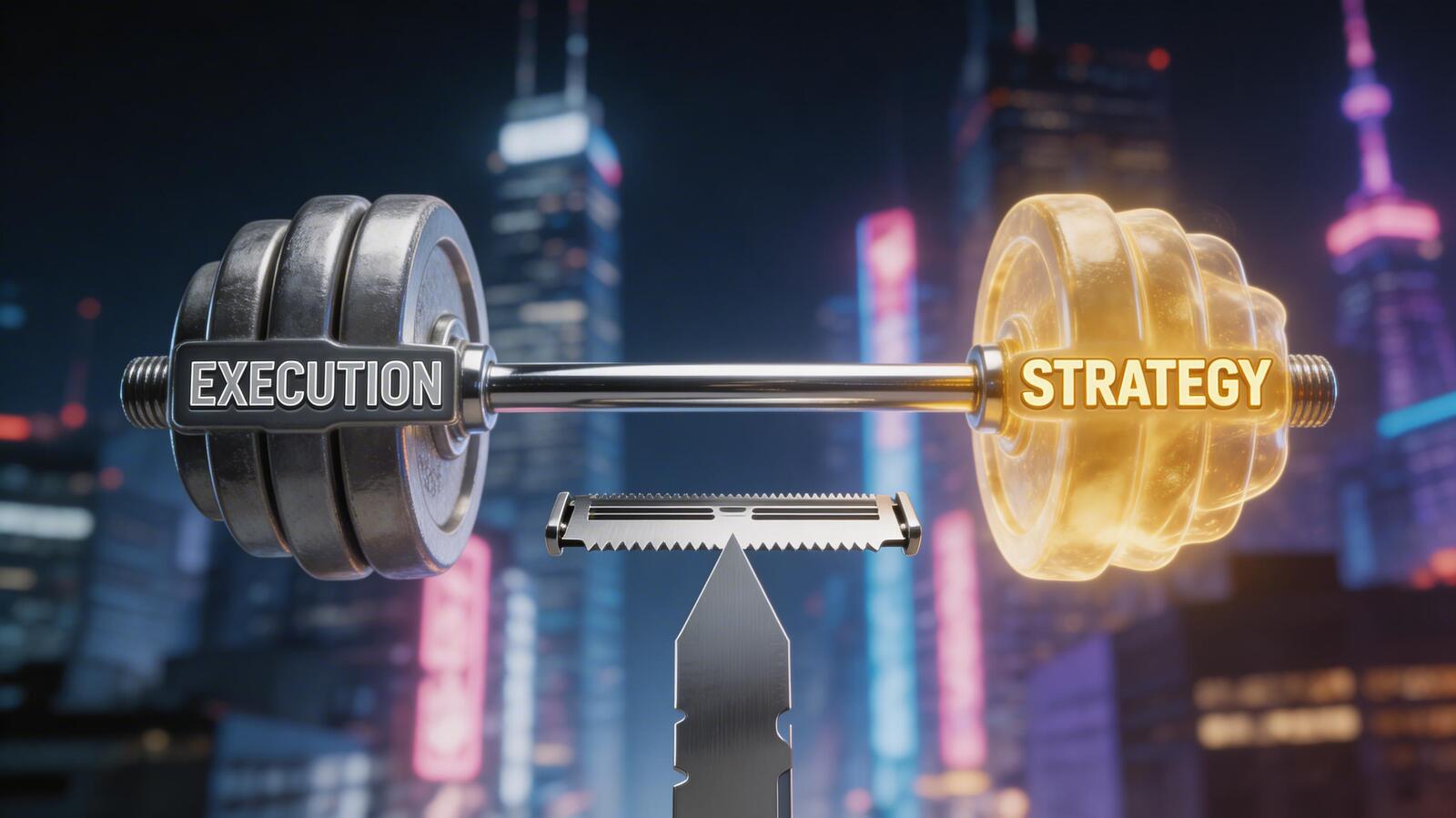
1. Defining the Barbell: Abundance vs. Scarcity
The “Barbell Opportunity” is a strategic framework derived from Nassim Taleb’s concept of antifragility. In the context of 2026, it describes the radical bifurcation of the value chain.
On one end of the barbell, we have Machine Abundance. This is the side of execution. Thanks to frontier models like Claude Opus 4.6 and GPT-5.3, the cost of “doing”—writing code, generating cinematic visuals, or automating a CRM—is trending toward zero. If a task can be defined by a process, it is now a commodity.
On the other end of the barbell is Human Scarcity. This is the side of inquiry, judgment, and “The Question.” As the “noise floor” of synthetic content rises, the ability to identify a unique point of view (POV) and ask the machines the right questions is the only thing that retains a premium.
In my 15 years in Japan, I wasn’t just a guy with a camera; I was the guy who knew what to shoot to make a brand look premium. Managing an AI workforce requires that same creative intuition. The “mushy middle”—the people who simply “use” AI to do what everyone else is doing—is the most fragile place to be in 2026.
2. The Commodity of the “How”: Why Execution is No Longer a Moat
In 2024, being able to build an automated workflow in n8n was a specialized skill. In 2026, it is a basic requirement. We have moved from “read-only” AI that chats to “read-write” AI that executes.
My agency, UNTHAI, is the “Execution Engine” of this barbell. We build systems that reduce handle times by 42% and resolve 95% of L1 tickets autonomously. This level of efficiency is now the baseline. If your only value proposition is “I can do this faster,” you are competing with a machine that works for pennies.
The industry data is staggering: by early 2026, over 40% of enterprise applications feature autonomous agents, up from just 5% a year ago. The “How” has been solved. The “digital assembly line” is now a standard part of business infrastructure.

3. The Scarcity of the “What”: Strategy as the New Interface
If execution is a commodity, then Strategy is the new Interface. The most successful leaders of 2026 are those who have moved up the value chain from “Prompt Engineers” to “Agent Orchestrators.”
Coming up with great questions is a task that favors creativity over engineering. This is where my background in Japan Runway and Tokyo Street Style becomes my greatest technical asset. Creative direction is about making a thousand micro-decisions to achieve a specific emotional impact. In 2026, those micro-decisions are the “instructions” we give to our 18-bot Mission Control.
I always refer to AI as a “Stagiaire désireux de plaire” (an eager intern). The intern has infinite energy but zero common sense. If you ask it the wrong question, it will give you a brilliant answer to a problem that doesn’t exist—or worse, it will “hallucinate” a solution that ruins your brand reputation. Your moat is the “eye” that spots the hallucination before it hits the runway.
4. The 18-Bot Mission Control: Orchestrating the Barbell
To capture the Barbell Opportunity, you need a system that can handle both ends simultaneously. This is why I built the 18-bot Mission Control using the OpenClaw framework.
In this setup, my agents are not just “tools”; they are Outcome Owners.
-
The Execution Bots: Handle the “heavy” side of the barbell—n8n workflows, API syncing, and content repurposing.
-
The Strategy Bots: Handle the “light” side—researching global trends, monitoring “vibe coding” breakthroughs, and flagging “rizz” opportunities in my CRM.
The secret to making this work is the Heartbeat mechanism. My agents don’t wait for me to prompt them. They proactively check my HEARTBEAT.md file every 30 minutes to see what needs to move forward. This allows me to stay on the “Strategy” side of the barbell, focusing on the “What,” while the 18-bot squad manages the “How” in the background.

5. Bifurcation: XHEART vs. UNTHAI
One of the core rules of the Barbell Strategy is to avoid the “mushy middle.” This is why I have intentionally separated my professional world into two distinct entities:
XHEART: The Human Interface (The “What” and “Why”)
XHEART is my personal brand. It is where the “Calm Expertise” lives. My content here is philosophical, experimental, and vulnerable. I share the “Diary” of building my 18-bot system, the friction of automation, and my views on the Future of Work. People trust XHEART because it represents a human mind navigating the machine world.
UNTHAI: The execution Engine (The “How”)
UNTHAI is the agency. It is a specialized “AI Creative & Automation Studio.” While XHEART asks the questions, UNTHAI builds the visuals, the agents, and the workflows that deliver ROI.
This division allows me to be both a “Tool Scout” and a “System Builder” without duplicating effort or confusing my audience. One side is the Interface of Trust; the other is the Engine of Results.
6. The “Lethal Trifecta” and the Responsibility of Leadership
As we embrace the Barbell Opportunity, we must also manage the risks. The greatest danger for an Agentic CEO in 2026 is the “Lethal Trifecta”:
-
Access to Private Data
-
External Communication
-
Untrusted Content Processing
If you give an autonomous agent the power to act on your behalf, you must also give it Human-in-the-Loop (HITL) guardrails. In my 18-bot roster, I use ClawBands, a security middleware that pauses the bots before they execute any dangerous tool call, requiring a “Yes” from my phone.
This isn’t just a technical configuration; it is a Leadership Framework. You are “tending” the agents, reviewing and correcting their decisions to ensure they align with your brand’s “Soul.”

Conclusion: Lead with the Lobster
The “iPhone Moment” of AI has arrived, and it has brought with it the Barbell Opportunity. You can either be crushed by the commodity of execution, or you can rise to the level of Strategic Orchestration.
My 15 years in the Tokyo creative scene taught me that the “light” is always changing. The leaders who win in 2026 will be those who stop trying to out-work the machines and start trying to out-think them.
The question is no longer “How do I use AI?” It is “What is the most powerful question I can ask today?”
Take your seat at the Mission Control desk. The lobster is taking over the world, but you are the one holding the claw.