Penguin Random House Doubles Picking with Locus
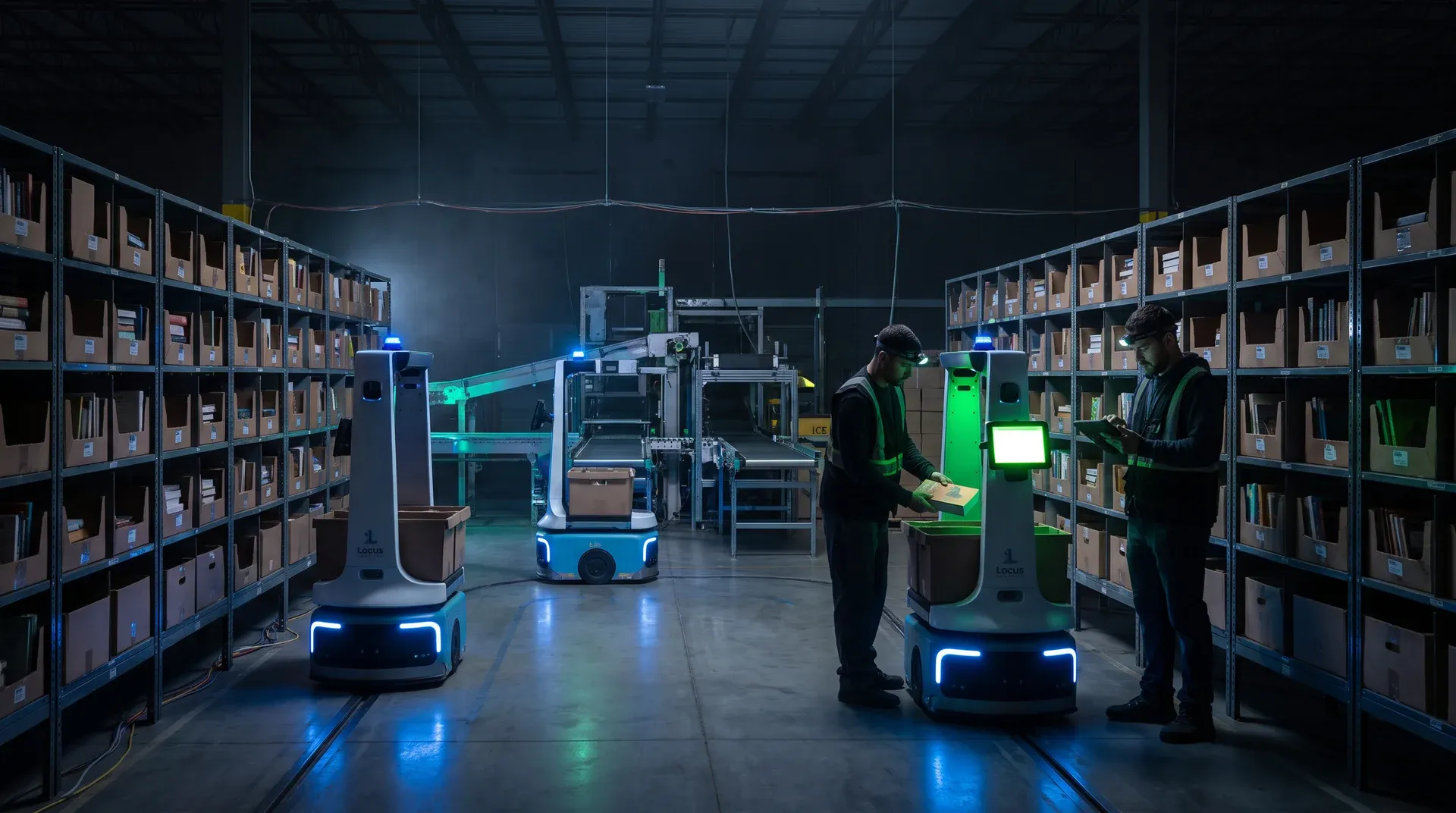
Penguin Random House Grupo Editorial doubled book picking productivity using Locus Robotics warehouse automation. The system handles the specific, high-volume task of retrieving items from shelves, reducing the manual labor required for order fulfillment in large-scale distribution centers.
By Mat, CEO of UNTHAI
I watched the numbers come in for Penguin Random House Grupo Editorial, and the result is stark. They doubled their book picking productivity by deploying Locus Robotics. This is not a lab demo. This is a live, high-volume operation where the cost of a minute's delay is measured in missed shipments and unhappy customers. For any business owner looking at warehouse automation, this is the benchmark. The question is no longer whether robots can pick boxes; it is whether your operation is structured to let them do it without breaking your workflow.
This is for operations directors and logistics managers who are currently bottlenecks at the picking stage. If your team spends 60% of their shift walking to shelves, you are paying for movement, not value. Locus Robotics provides the hardware and software to decouple the human from the walking. The outcome is a 100% increase in throughput for the same headcount, or the ability to handle double the volume with the same team. I have seen this pattern before in other verticals, but the scale of a major publisher makes this case study particularly relevant for anyone handling high-SKU, high-velocity inventory.
Why It Matters Right Now
The timing of this announcement is critical because the labor market for warehouse work is tightening. You cannot simply hire your way out of a picking bottleneck anymore. The cost per unit is rising, and the error rates associated with human fatigue are climbing. Locus Robotics has been in the game long enough to refine the 'goods-to-person' model, where the robot brings the shelf to the worker. This is not the same as the autonomous mobile robots (AMRs) that just move pallets. This is a system that integrates with your Warehouse Management System (WMS) to optimize the pick path in real-time.
As noted in the report by Robotics and Automation News, the integration is the key. It is not just about buying a robot; it is about changing the physical layout of the facility to accommodate the robots. This shift is happening now because the ROI calculation has flipped. The cost of automation has dropped, while the cost of labor has risen. For a company like Penguin Random House, which deals with thousands of SKUs and seasonal spikes, the ability to scale up and down without hiring and firing is a strategic advantage. If you are still running a manual picking operation in 2026, you are operating at a structural disadvantage.
The Play: Step-by-Step
You cannot just buy a Locus robot and plug it in. The integration is complex. Here is how a business approaches this transition based on the workflow implied by the case study.
- Audit your current picking metrics. Before you look at vendors, you need your baseline. Calculate your current picks per hour per picker. Identify the top 20% of SKUs that account for 80% of your picks. This data will determine if you are a good candidate for goods-to-person automation. If your picks are highly variable and low volume, a different solution might fit. If you have high velocity and high SKU count, this is your play. Expect to spend two weeks gathering this data from your WMS.
- Map your facility layout for robot traffic. Locus robots need clear aisles and specific docking stations. You will likely need to reconfigure your racking. This is the most disruptive part of the process. Work with a logistics consultant to create a new floor plan that allows robots to move between racks without blocking human movement. This step often takes four to six weeks of planning and engineering. Do not skip this; a poorly laid-out facility will negate the productivity gains.
- Integrate with your WMS. The robot fleet is controlled by software that talks to your existing system. You need to ensure your WMS can send pick lists to the Locus software and receive status updates. This is a development project, not a plug-and-play installation. Your IT team will need to work with Locus to build the API connections. Budget for two to three months of development and testing. The goal is for the system to automatically assign picks to the nearest available robot and human pair.
- Run a parallel pilot. Do not shut down your current operation to test the new one. Run a small section of the warehouse with the robots while the rest runs as usual. Compare the metrics directly. Look for error rates, throughput, and worker feedback. This pilot phase typically lasts 30 to 60 days. Use this time to train your staff on the new workflow. The human role shifts from 'picker' to 'robot supervisor,' which requires different skills.
Real-World Example
Consider a mid-sized e-commerce distribution center handling 500,000 orders a year. Before automation, they had 100 pickers working three shifts. Their average pick rate was 120 picks per hour. By implementing a Locus Robotics system, they reduced the number of pickers needed to 50 per shift, but each picker now works with a robot that brings the shelf to them. The pick rate jumps to 240 picks per hour. The result is not just double the speed; it is a 50% reduction in labor costs for the picking function. The workers who remain are not walking 15 miles a day; they are standing at a station, picking items, and scanning them. The physical strain is lower, which reduces injury claims. The error rate drops because the worker is not tired from walking. This is what the Penguin Random House case study represents: a fundamental change in how human labor is applied in a warehouse. The robot does the walking; the human does the thinking and the handling.
Caveats
This is not a solution for every warehouse. If your items are extremely heavy or irregularly shaped, the standard Locus racking might not fit. You need to assess your SKU profile first. The initial capital expenditure is significant. You are not buying a single robot; you are buying a fleet and a software platform. The payback period depends entirely on your current labor costs and volume. If you are a low-volume operation, the ROI will be poor. Also, the integration with your WMS is the biggest risk. If your WMS is legacy or poorly documented, the integration will take longer and cost more. Do not underestimate the change management aspect. Your staff will be resistant to the new workflow. You need to invest in training and communication. This is a six-month project, not a two-week install.
Action Items
- Export your last 90 days of picking data from your WMS and calculate your picks per hour per employee.
- Identify the top 50 SKUs by volume and map their current storage locations to identify hot spots.
- Schedule a technical call with a warehouse automation vendor to discuss your WMS API capabilities.
Frequently Asked Questions
How much does warehouse automation cost?
The cost varies widely based on volume and square footage. For a system like Locus Robotics, you are looking at a capital investment for the robot fleet, software licensing, and integration services. There is no single price tag, but the ROI is typically calculated against labor savings. You should request a detailed quote based on your specific SKU count and order volume.
Is warehouse automation worth it for small businesses?
For small businesses with low order volumes, the ROI may not be immediate. Automation shines in high-velocity, high-SKU environments. If you are picking fewer than 10,000 items a day, the cost per pick for automation might be higher than manual labor. However, if you are growing rapidly and facing labor shortages, it may be a strategic necessity regardless of immediate ROI.
What is the payback period for Locus Robotics?
The payback period depends on your current labor costs and the increase in throughput. In high-volume operations, the payback can be under two years. For lower-volume operations, it may take three to five years. The key metric is the reduction in cost per pick. If you can cut your cost per pick in half, the payback period shortens significantly.
Can I integrate Locus Robotics with my existing WMS?
Yes, Locus Robotics provides software that integrates with major WMS platforms. The integration involves API connections that allow the robot fleet to receive pick lists and report status. The complexity of this integration depends on the age and flexibility of your WMS. Legacy systems may require custom development, which increases cost and timeline.
Related reading
Sources
- Powering Automated Sites Without Oversizing: What Battery Storage Brings to Peak-Heavy Operations, roboticsandautomationnews.com (accessed 18 Nov 2026)
- Agile Robots raises $500M to increase production capacity, therobotreport.com (accessed 18 Nov 2026)
- Food robotics 2.0: why this time could be different, therobotreport.com (accessed 18 Nov 2026)
- Penguin Random House doubles book picking productivity with Locus Robotics, roboticsandautomationnews.com (accessed 18 Nov 2026)