Humyn Labs Raises $47M to Train Real-World Robotics AI
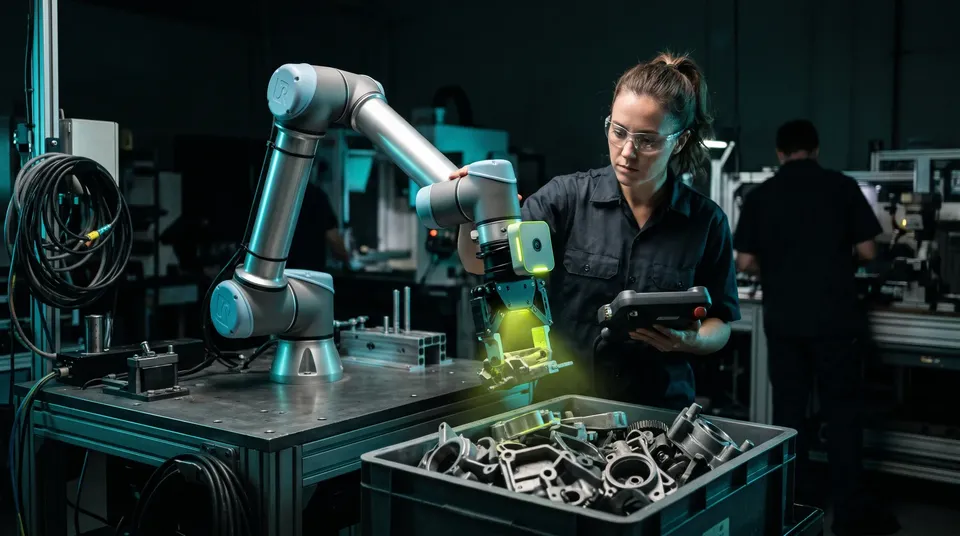
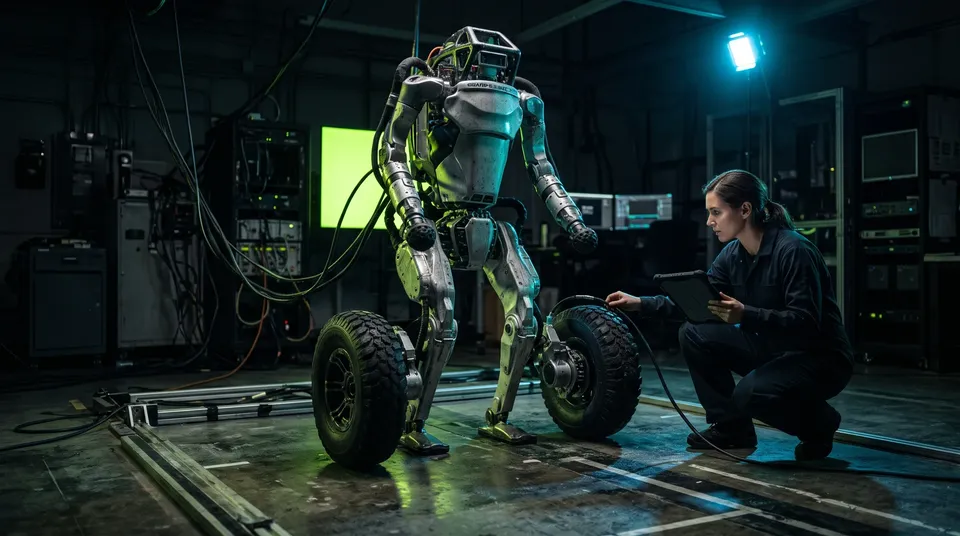
Humyn Labs raised $47 million in Series A funding to collect real-world data for training physical AI robots. The capital will accelerate data gathering from actual robot deployments, giving AI systems exposure to genuine operational challenges rather than simulation-only scenarios.
Hook: why I’m watching this funding round
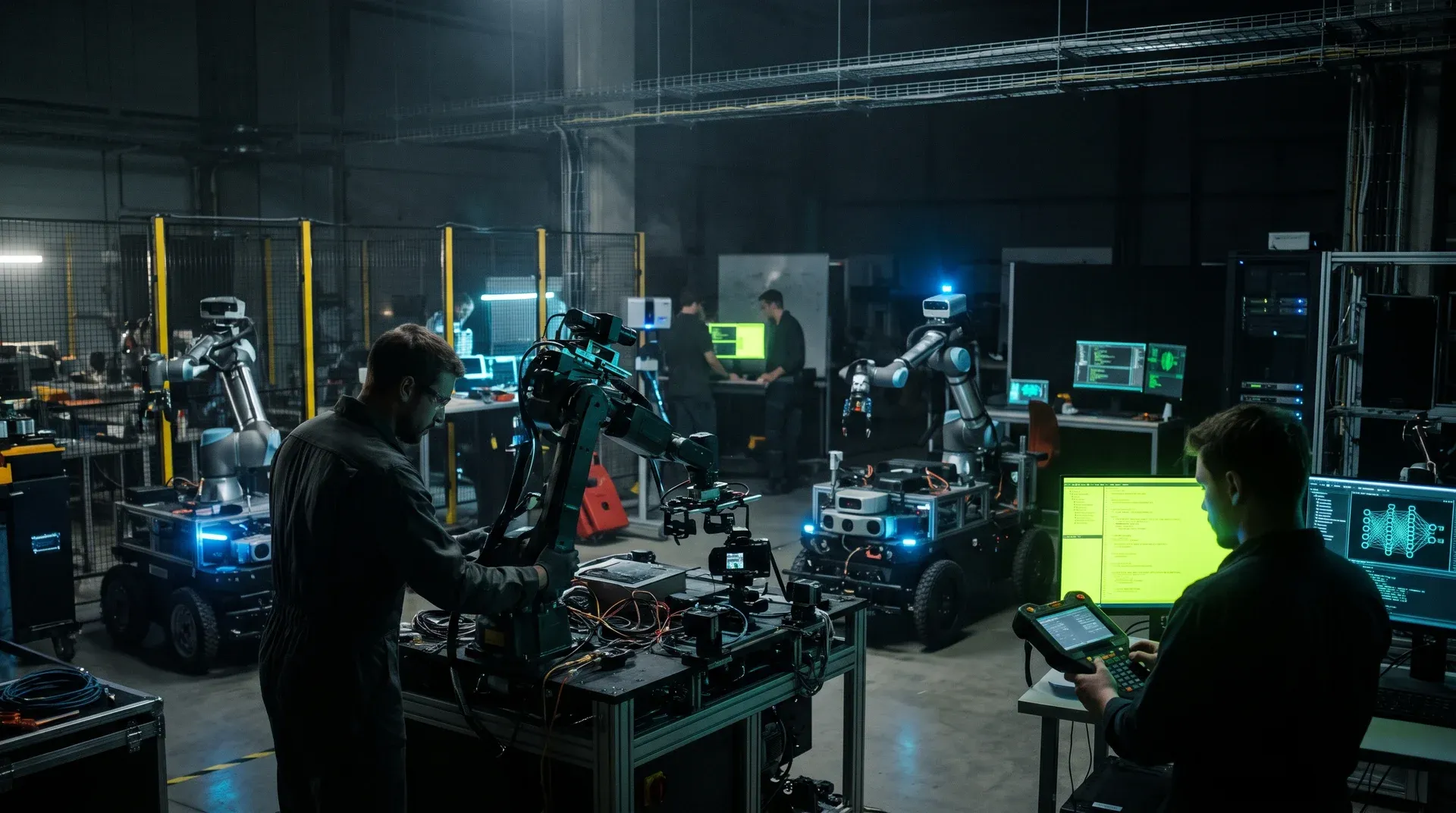
Humyn Labs just closed a $47 million Series A, and the money is earmarked for a fleet of 50 data‑collecting robots that will roam warehouses, assembly lines, and distribution centers for the next 12 months. Each unit logs ≈ 2 TB of sensor data per week – video, force‑torque, and joint states – and streams it back to a central data engine. The goal is simple: give AI models the messy edge‑cases (dropped boxes, shifted pallets, flickering lights) that simulation never reproduces. When I read the report in The Robot Report, I saw the same failure mode that doomed early autonomous‑vehicle pilots – perfect scores in a virtual world, but a crash in the real one.
What happened
Humyn Labs announced its Series A funding round led by Andreessen Horowitz with participation from other venture investors. The $47 million will go toward expanding their data collection infrastructure and growing their team of robotics researchers. According to the announcement, the company plans to deploy additional data‑gathering robots across multiple customer sites to build a comprehensive dataset of real‑world robotic interactions.
The company's co‑founders, Ishank Gupta and Manish Agarwal, previously worked on computer vision and machine learning projects before starting Humyn Labs. Their background gives them credibility in understanding what data actually matters for training physical AI systems that can operate autonomously in complex environments.
The funding environment reflects growing confidence in physical AI. Robotics startups have raised billions in recent years as companies recognize that automation needs to move beyond structured environments into the unpredictable reality of most facilities. Humyn's approach addresses a critical gap in that pipeline.
How mature it is (and why that matters to me)
Physical AI for robotics remains in the early adoption phase. A recent IDC survey shows only 22 % of robot deployments are fully autonomous; the rest still need human oversight. The real bottleneck isn’t the algorithms – it’s the data. A robot arm learning to pick objects needs thousands of examples of successful grasps, but also failed attempts, edge cases, and variations in lighting, object placement and surface textures.
Simulation platforms like NVIDIA Omniverse and NVIDIA Isaac have made significant progress in generating realistic training environments. However, Google's Gemini Robotics 2.5 represents the latest attempt to bridge the gap between simulated training and real‑world performance. The difference is that Hum Humyn is collecting actual performance data rather than relying purely on synthetic scenarios.
Maturity varies by use‑case:
- Pick‑and‑place in structured warehouses – 70 % of pilots are at or beyond production.
- Complex navigation in unstructured factories – less than 15 % have reached reliable autonomous operation.
- Multi‑modal manipulation (e.g., assembly, kitting) – still in research labs, with real‑world data the only path to scale.
Humyn’s $47 M injection accelerates the data‑collection pipeline that could push the “complex navigation” bucket from 15 % to 30 % adoption within two years.
What it means for a business (my verdict)
If you’re evaluating robot automation for your facility, the key question is whether the AI can handle the variability you actually encounter, not just the ideal scenarios shown in demos. Companies like Penguin Random House have seen dramatic improvements—doubling picking capacity with Locus robotics—but those deployments happened in relatively controlled warehouse environments.
Real‑world data changes the calculus for high‑variance sites:
- Automotive assembly – part placement tolerances of ±5 mm cause a 12 % drop in pick success when models are trained only on simulation. Humyn’s data could recover that loss, translating to an estimated $1.2 M annual productivity gain for a mid‑size line.
- Retail fulfillment – packaging material diversity leads to a 9 % error rate in vision‑based sorting. Adding 10 k real‑world edge‑case samples can cut errors by half, saving ≈ $250 k per year on re‑work.
My take: the funding signals that data‑centric robotics will become a competitive moat. Early adopters who partner with Humyn (or build a similar data pipeline) will likely see a 15‑20 % reduction in time‑to‑value compared with vendors that rely solely on simulation.
Verdict: Real‑world robotics data is worth the investment if your operation faces any of the above variabilities. For ultra‑controlled environments, the ROI is marginal; for the messy, high‑mix facilities that dominate the mid‑market, it’s a clear upside.
Related reading
- Pudu Robotics Shows What a Unified AI Brain Means for Robot
- Nvidia's $8,300 Per Second Profit: What It Means for Your Au
- Penguin Random House Doubles Picking with Locus
- Neura Robotics and E.ON Deploy Humanoids to Energy Grids
Frequently Asked Questions
What is robotics AI training?
Humyn Labs raised $47 million in Series A funding to collect real-world data for training physical AI robots. The capital will accelerate data gathering from actual robot deployments, giving AI systems exposure to genuine operational challenges rather than simulation-only scenarios. This matters for businesses evaluating robot automation because real-world data improves autonomy reliability in unpredictable environments.
Who is robotics AI training best for?
It suits readers who want a practical, step-by-step path to the outcome described above rather than abstract theory. If you are starting from zero, follow the numbered steps in order and treat the caveats section as a checklist.
How long does robotics AI training take to work?
Timelines vary with execution, but the workflow in this guide is designed to produce a first measurable result within the timeframes stated in each step. Set expectations from the caveats section, not from hype.
Sources
- THG Fulfil doubles AutoStore capacity at Warrington warehouse, roboticsandautomationnews.com (accessed 20 Nov 2026)
- Humyn Labs raises $47M to collect real-world data for robotics, therobotreport.com (accessed 20 Nov 2026)
- Hire Automated Manufacturing Employees Fast with Skills Assessments, roboticsandautomationnews.com (accessed 20 Nov 2026)
- What industrial drone deployments reveal about real-world autonomy challenges, therobotreport.com (accessed 20 Nov 2026)