Universal Robots Gen 7 AI Vision Integration
Universal Robots integrates Inbolt's 3D AI vision directly into Gen 7 robots. This allows for automated pick-and-place without external cameras. It simplifies setup for business owners by embedding the sensing layer into the arm itself, reducing integration complexity.
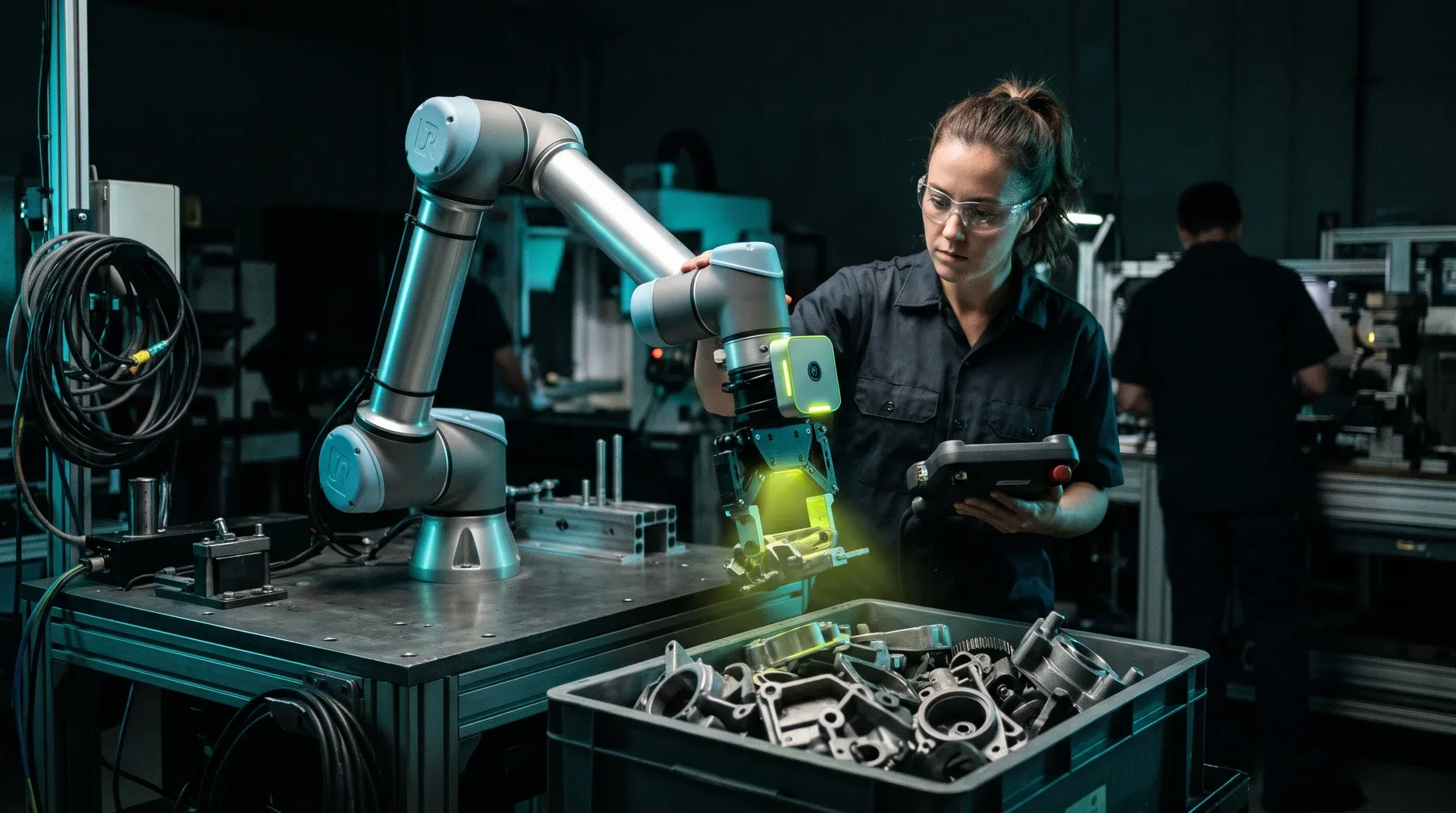
The days of bolting a separate, expensive vision system onto a robotic arm are ending. I have spent the last few years watching manufacturers struggle with the gap between a robot that can move and a robot that can see. The integration of Inbolt's 3D AI vision directly into the Universal Robots Gen 7 platform represents a significant shift in how we approach physical automation. This is not just a software update; it is a hardware-level convergence that changes the total cost of ownership for small to mid-sized automation projects. For business owners deciding what to automate next, this development removes one of the biggest friction points in deployment: the complexity of integrating disparate hardware systems.
When I look at the current landscape, the primary barrier to entry for robotics is not the robot itself, but the intelligence layer. Historically, you bought a robot, then bought a camera, then bought a computer, and then hired an integrator to make them talk to each other. That process added months to deployment and thousands of dollars to the budget. By embedding the vision capability directly into the Gen 7, Universal Robots is collapsing that supply chain. If you are an operator looking to add a pick-and-place cell or a quality inspection station, this is the kind of infrastructure change that makes the math work for smaller batch sizes. The outcome is a robot that arrives on the floor ready to perceive its environment without the traditional sensor stack. This is for manufacturers who have been on the fence because the integration cost was higher than the labor savings.
What happened
Universal Robots and Inbolt have announced the direct integration of AI-powered 3D vision guidance into the latest generation of Universal Robots' arms, specifically the Gen 7 line. According to robotics and automation news reports, this is not a peripheral add-on that requires external cabling or separate mounting hardware. Instead, the vision system is built into the robot's architecture. This means the sensing layer is native to the mechanical structure. The collaboration focuses on making 3D vision a standard feature rather than a specialized module. This move aligns with a broader trend in physical AI where the boundary between the actuator (the arm) and the perceiver (the camera) is disappearing. The source indicates that this integration is designed to simplify the user experience for automation engineers who do not have a dedicated computer vision team. It effectively turns the robot arm into a self-contained sensing unit.
How mature it is
This is a new product release, so we are in the early adoption phase. However, the underlying technology is not experimental. 3D vision for robotics has been available for years through companies like RealSense and Photoneo, but typically as standalone cameras. The maturity here lies in the integration, not the raw sensor technology. Universal Robots has a long track record of collaborating with third-party vision providers, so this is not their first foray into this space. The key differentiator is the "directly onto" aspect mentioned in the report. This suggests a level of firmware and hardware compatibility that reduces calibration time. I would classify this as a production-ready technology for standard pick-and-place and inspection tasks, but I would still recommend a pilot phase before scaling to high-volume lines. The AI component implies that the robot can handle variable part placement, which is a more complex use case than fixed-position picking. This level of dexterity requires robust training data, which the vendor likely provides as part of the package. It is mature enough for immediate deployment in controlled environments, but you should verify the specific AI models included in the Gen 7 software stack for your specific part geometries.
What it means for a business
For a business owner, this integration lowers the barrier to entry for automation. Previously, adding vision to a robot required a separate budget line for cameras, controllers, and integration labor. Now, that functionality is bundled into the robot's purchase price and setup time. This improves the ROI calculation for smaller operations. If you are running a job shop with varied part sizes, the ability to use a robot with native 3D vision allows you to switch over production runs without re-coding complex vision parameters for each new part. This is where the AI agent aspect comes in; the robot is adapting to its environment in real-time. It also reduces the need for specialized labor. You no longer need to hire a computer vision engineer to maintain the camera calibration. Your standard robotics technician can manage the system. This is a significant operational shift. I see this as a way to democratize advanced automation. The cost of intelligence is dropping, and the complexity of integration is flattening. For those looking to automate a specific bottleneck, this is a strong signal that the hardware is ready. You can focus on the process logic rather than the sensor plumbing. It also opens the door for more complex tasks, such as bin picking, where the object position is not fixed. This is a capability that was previously reserved for high-end, expensive systems. Now, it is accessible to the mid-market. This aligns with the broader trend of making physical AI more accessible, similar to how ABB's AI Robot Trainer allows users to program vision without deep expertise. The combination of hardware integration and software accessibility is what makes this viable for a wider range of businesses.
Frequently Asked Questions
Does Universal Robots Gen 7 require external cameras for vision?
No, the Gen 7 integrates Inbolt's 3D AI vision directly into the robot's architecture. This means the sensing capability is built-in, eliminating the need for separate external camera hardware for standard vision-guided tasks.
Is this integration suitable for small batch manufacturing?
Yes, the reduced integration complexity and bundled software make it more viable for smaller operations. The ability to handle variable part placement without extensive re-calibration is particularly useful for job shops with varied production runs.
How does this compare to previous vision add-ons?
Previous solutions typically required separate cameras, controllers, and cabling. The Gen 7 integration collapses this into a single unit, reducing setup time and the need for specialized computer vision expertise for maintenance.
Related reading
Sources
- FCC should focus on robot security, not country of origin, therobotreport.com (accessed 27 Nov 2026)
- Researchers develop 3D-printable humanoid robotic hand costing less than $650, roboticsandautomationnews.com (accessed 27 Nov 2026)
- Universal Robots brings Inbolt’s 3D AI vision directly onto its Gen 7 robots, roboticsandautomationnews.com (accessed 27 Nov 2026)