Warehouse Robots and Customs: What You Need to Know
A mis‑filed customs form can idle a warehouse robot for six weeks, costing time and money. I explain why checking tariff codes before deployment prevents costly delays, and how to embed paperwork checks into your robot rollout plan.
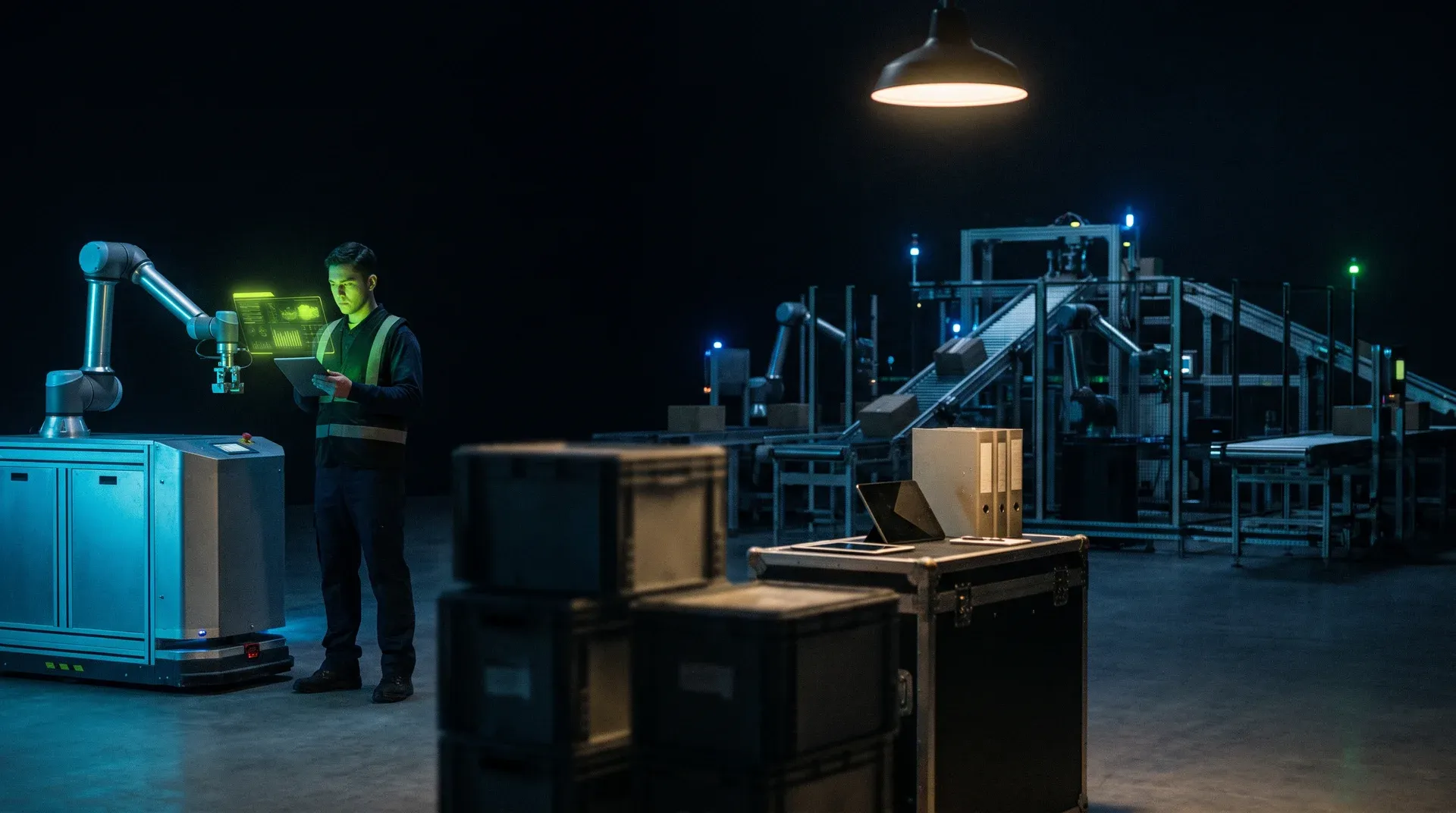
I watched a Skypod system—engineered over eighteen months—sit idle in a port warehouse for six weeks because a single customs form listed the wrong harmonized tariff code. The robot itself worked perfectly; the paperwork didn't. That delay translates directly into lost throughput and extra labor costs.
This is for operations managers and supply‑chain leaders who are planning to move robotic cells across borders and need a concrete step to protect their rollout schedule.
What happened
A global automation team deployed a Skypod warehouse robot to a European port. The robot arrived, was unpacked, and passed all internal acceptance tests. However, when the customs broker submitted the import paperwork, the tariff code entered was for a generic "industrial equipment" instead of the specific "automated material handling system." The error triggered a manual review that lasted six weeks. The robot sat in a staging area, fully powered but unused, while the paperwork dispute was resolved. The technical team was cleared of blame; the robot functioned as designed, but the delay cost the company weeks of lost processing capacity.
What I'm changing in our rollout checklist
Warehouse robots have reached a high level of mechanical and software reliability—most manufacturers report mean‑time‑between‑failures (MTBF) in the tens of thousands of hours. What remains immature is the integration of these systems into international logistics chains. Customs classification, tariff‑code databases, and cross‑border documentation are still largely manual processes. The incident shows that even a mature robot can be rendered useless by a paperwork bottleneck. Companies that have built dedicated compliance teams report fewer than one week of customs‑related delay on average, indicating that the gap can be closed with the right procedural discipline.
Here's what I'm adding to every robot export checklist at UNTHAI:
- Add a tariff‑code verification step before any crate leaves the dock. Use the HS‑Code lookup tool provided by the World Customs Organization or a paid service like TradeInfo to confirm the exact classification before filing. I caught a misclassification on a palletizing cell last month that would have added three weeks.
- Assign ownership: designate a compliance lead who reviews all robot‑related shipments. This person should be involved from the engineering design phase through to the final customs filing. At UNTHAI, that's now a named role, not a shared responsibility.
- Build a documentation template that includes the robot's technical specifications, intended use, and the exact HS‑Code. Store the template in a shared repository so the logistics team can pull it quickly. We use a Notion database linked to our ERP.
- Run a pilot: before a full‑scale rollout, ship a single robot through the same customs route and track the clearance time. Adjust the paperwork based on that experience. We did this for a German deployment in Q1—cleared in four days instead of the projected three weeks.
- Treat compliance as a software dependency. The principle holds for both AI agents and physical robots. When we integrate AI agents into factories, we version-control the compliance artifacts the same way we version-control model weights. Same workflow, different asset type.
- Benchmark performance: compare your customs clearance times against industry reports. For example, the ABB high‑performance robot rollout reduced cycle time by up to 20% when the supply chain was fully synchronized, as we noted in ABB high‑performance robots cut cycle time up to 20%. A similar synchronization of paperwork can unlock the robot's full value.
By embedding these steps, a business can turn a potential six‑week outage into a smooth, days‑long process, preserving the ROI of the robot investment.
Follow me for more field notes: https://xheart.tv Subscribe to the Briefing: https://xheart.tv/briefing For business engagements: https://xheart.si / UNTHAI
Related reading
- Vision‑Force‑Action Robots: $150M Funding Shifts the Pace
- Choosing BLDC Motors for Robot Arms and Mobile Robots
- Hour-Long Autonomous Robot Pod Arrives Now
- AI agents for factories: what they do today
Frequently Asked Questions
What is warehouse robot customs?
A mis‑filed customs form can idle a warehouse robot for six weeks, costing time and money. I explain why checking tariff codes before deployment prevents costly delays, and how to embed paperwork checks into your robot rollout plan.
Who is warehouse robot customs best for?
It suits readers who want a practical, step-by-step path to the outcome described above rather than abstract theory. If you are starting from zero, follow the numbered steps in order and treat the caveats section as a checklist.
How long does warehouse robot customs take to work?
Timelines vary with execution, but the workflow in this guide is designed to produce a first measurable result within the timeframes stated in each step. Set expectations from the caveats section, not from hype.
Sources
- Closing the Loop: How Automated Plants Turn Wastewater into Process Water, roboticsandautomationnews.com (accessed 28 Oct 2026)
- How Warehouse Robots Cross Borders: What Global Automation Teams Get Wrong About International Shipping, roboticsandautomationnews.com (accessed 28 Oct 2026)
- How ADI is helping robotics startups scale, therobotreport.com (accessed 28 Oct 2026)
- Agility chooses Nyobolt for ultra-fast charging for Digit 5 humanoid, therobotreport.com (accessed 28 Oct 2026)